
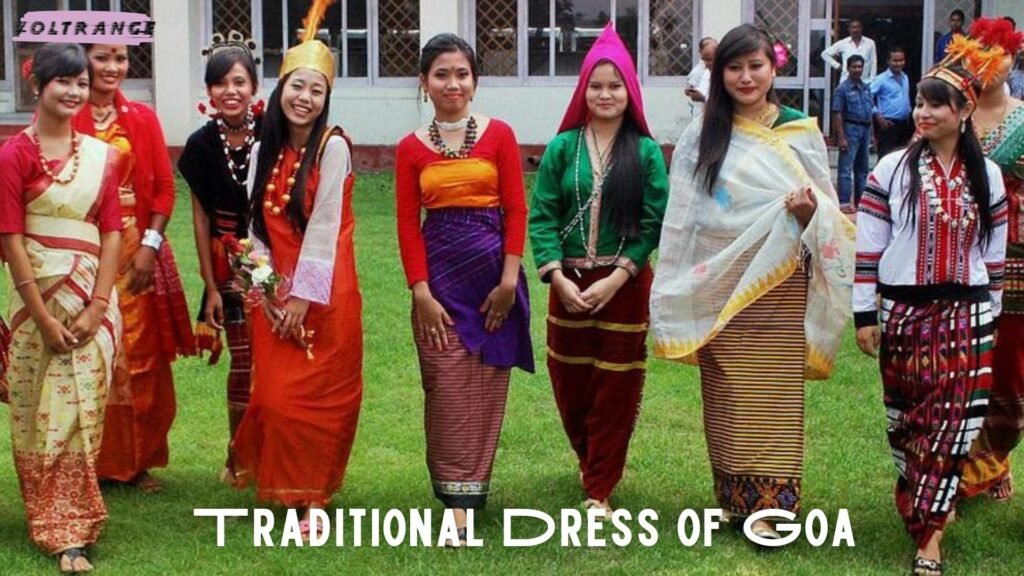
Traditional Dress of Goa
Traditional Dress of Goa: Goa, a coastal paradise in India, is renowned not only for its stunning beaches and vibrant nightlife but also for its rich cultural heritage. This cultural diversity is reflected in the traditional attire of the Goan people. The fusion of Indian and Portuguese influences has resulted in a unique blend of clothing styles that pay homage to Goa’s historical and multicultural roots. While modern attire has taken its place in everyday life, traditional clothing remains an important part of celebrations, festivals, and cultural events. Let’s dive into the traditional dress of Goa for both men and women, revealing how these clothes express the beauty and diversity of the Goan way of life.
Traditional Dress for Men in Goa
Dhoti-Kurta
The quintessential Goan men’s attire is the simple yet elegant dhoti-kurta. The dhoti, a long, unstitched piece of cloth wrapped around the waist, is paired with a kurta, a loose-fitting shirt. This combination is perfect for Goa’s warm tropical climate, offering comfort while maintaining a sense of traditional style. Made of lightweight fabrics such as cotton or silk, the dhoti-kurta symbolizes the relaxed and easy-going lifestyle of Goa’s people. Traditional Dress of Goa
Feni: The Traditional Goan Headgear
A unique part of traditional Goan men’s attire is the feni, a distinctive headgear made from cotton or silk. Decorated with colorful patterns and embroidery, the feni is both functional and symbolic. It shields the wearer from the strong Goan sun while also serving as a symbol of pride and cultural identity, reflecting the craftsmanship of local artisans.
Footwear: The Iconic Chappals
To complete the traditional look, Goan men wear leather sandals known as chappals. These durable, handmade sandals are a staple of coastal life, offering both comfort and style. The rustic charm of chappals enhances the overall traditional attire and connects the wearer to the artisanal heritage of Goa. Traditional Dress of Goa
Handloom Clothes: Reviving Tradition
There has been a resurgence in the appreciation of handloom fabrics in Goa, with efforts from local organizations and state initiatives helping to preserve traditional weaving techniques. These handwoven textiles are not only significant for their cultural importance but also provide sustainable livelihoods for rural communities. The renewed interest in handloom clothing has sparked a revival of traditional attire, bringing heritage into the modern era.
Traditional Dress for Women in Goa
Saree: A Timeless Classic
For Goan women, the saree is the epitome of elegance and tradition. Whether it’s the traditional Kunbi saree worn by tribal women or the intricate Banarasi silk sarees favored by others, the saree is a garment that exudes grace and femininity. Each saree tells a unique story, often incorporating motifs inspired by nature, mythology, and Goan culture. The saree is more than just a piece of clothing—it is a reflection of Goa’s rich cultural tapestry. Traditional Dress of Goa
Choli: A Perfect Match
The choli, a fitted blouse worn with the saree, adds both style and sophistication to the ensemble. Cholis come in a variety of designs, ranging from simple and traditional to more modern and embellished versions with embroidery, sequins, or mirror work. Women often pair their choli with a saree that complements the colors and patterns, creating a stunning and harmonious look.
Jewelry: The Finishing Touch
No traditional Goan attire is complete without jewelry. Goan women wear intricate gold necklaces, beaded bangles, earrings, and other ornaments, often adorned with semi-precious stones, pearls, and filigree work. The jewelry adds a touch of glamour to their traditional dress, with each piece holding cultural significance. The adornments symbolize social status, beliefs, and cultural heritage, making them an essential part of Goan tradition. Traditional Dress of Goa
Conclusion: A Celebration of Goan Heritage
Goa’s traditional attire is more than just clothing—it is a representation of its cultural richness, diverse heritage, and deep-rooted traditions. Festivals and celebrations, especially during the winter months, offer the perfect opportunity to witness Goans in their vibrant traditional outfits. These occasions allow people to express their cultural pride through music, dance, and rituals, with their clothing playing a central role in these celebrations. The beauty of Goan traditional attire lies in its ability to tell stories, preserve history, and bring people together in a shared celebration of their heritage.
FAQs Traditional Dress of Goa
What are the key elements of traditional men’s clothing in Goa?
Traditional Goan men’s clothing typically includes the dhoti-kurta, a comfortable and elegant combination of a loose shirt and unstitched cloth for the lower body. The feni, a traditional headgear, and leather sandals known as chappals complete the look.
What is the traditional saree worn by women in Goa?
The saree is the most common traditional attire for women in Goa, with the Kunbi saree being the traditional garment worn by tribal women. Other popular choices include Banarasi silk sarees, each with unique patterns and designs reflecting Goa’s diverse heritage.
How has Goa preserved its traditional weaving techniques?
Goa has seen a revival in traditional handloom weaving techniques through state-level initiatives and the support of local organizations. This resurgence has not only helped preserve cultural heritage but has also provided sustainable livelihoods for artisans in rural communities.
What role does jewelry play in Goan traditional attire?
Jewelry is an important part of Goan traditional attire, often made from gold and semi-precious stones. Women wear necklaces, bangles, and earrings that symbolize cultural identity, social status, and personal beliefs, adding a touch of glamour to their outfits.
How is the feni headgear significant in Goan culture?
The feni is a traditional headgear worn by Goan men, made of cotton or silk and decorated with embroidery. It not only serves as protection from the sun but is also a symbol of cultural pride and craftsmanship, reflecting the artistry of local weavers and artisans.



More Stories
Is Sansui an Indian Company? True Or Not
Handles Salary Revision and Appraisal: 10 Fact
Is Walmart an Indian Company? True Or Not